
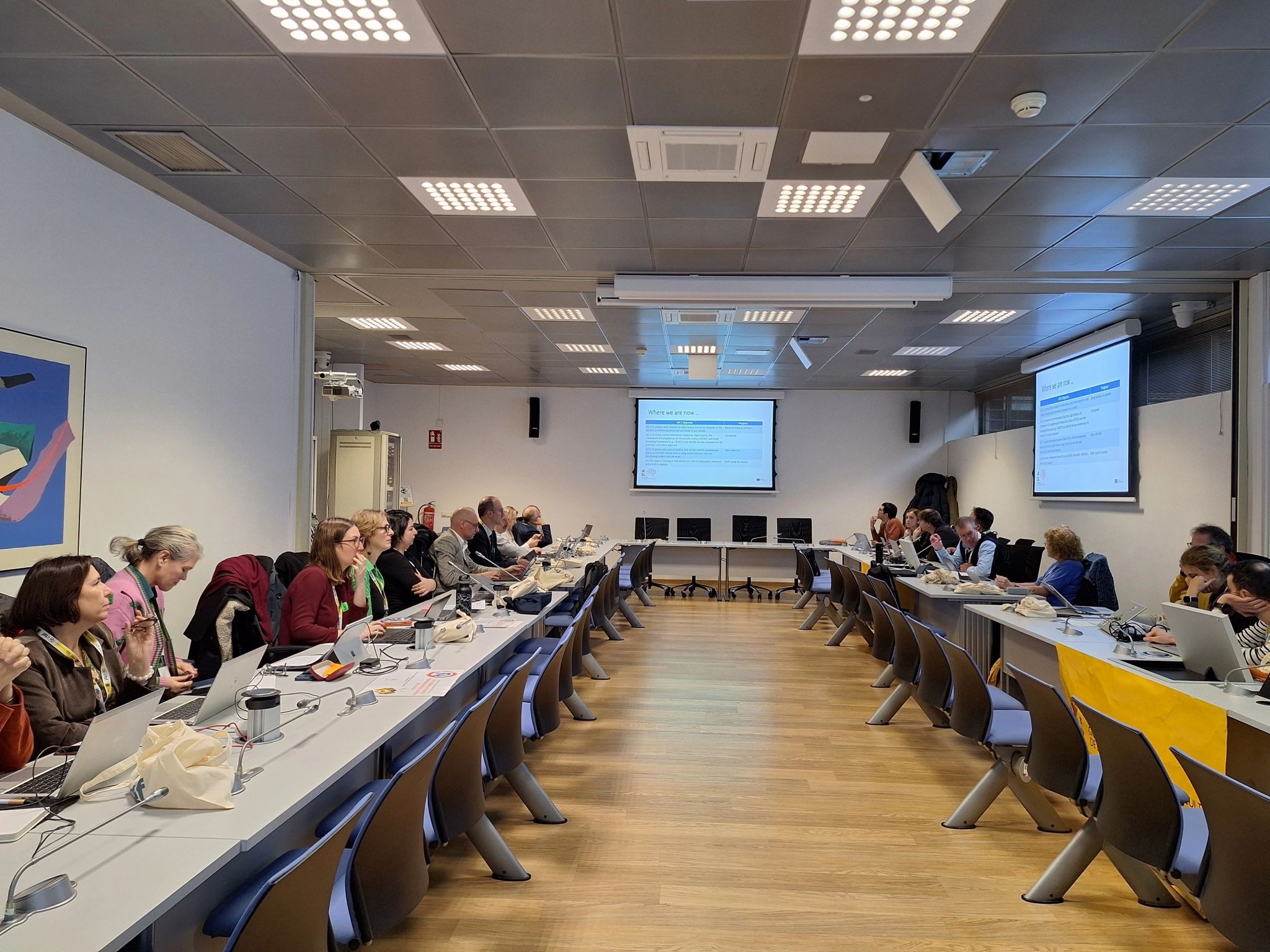
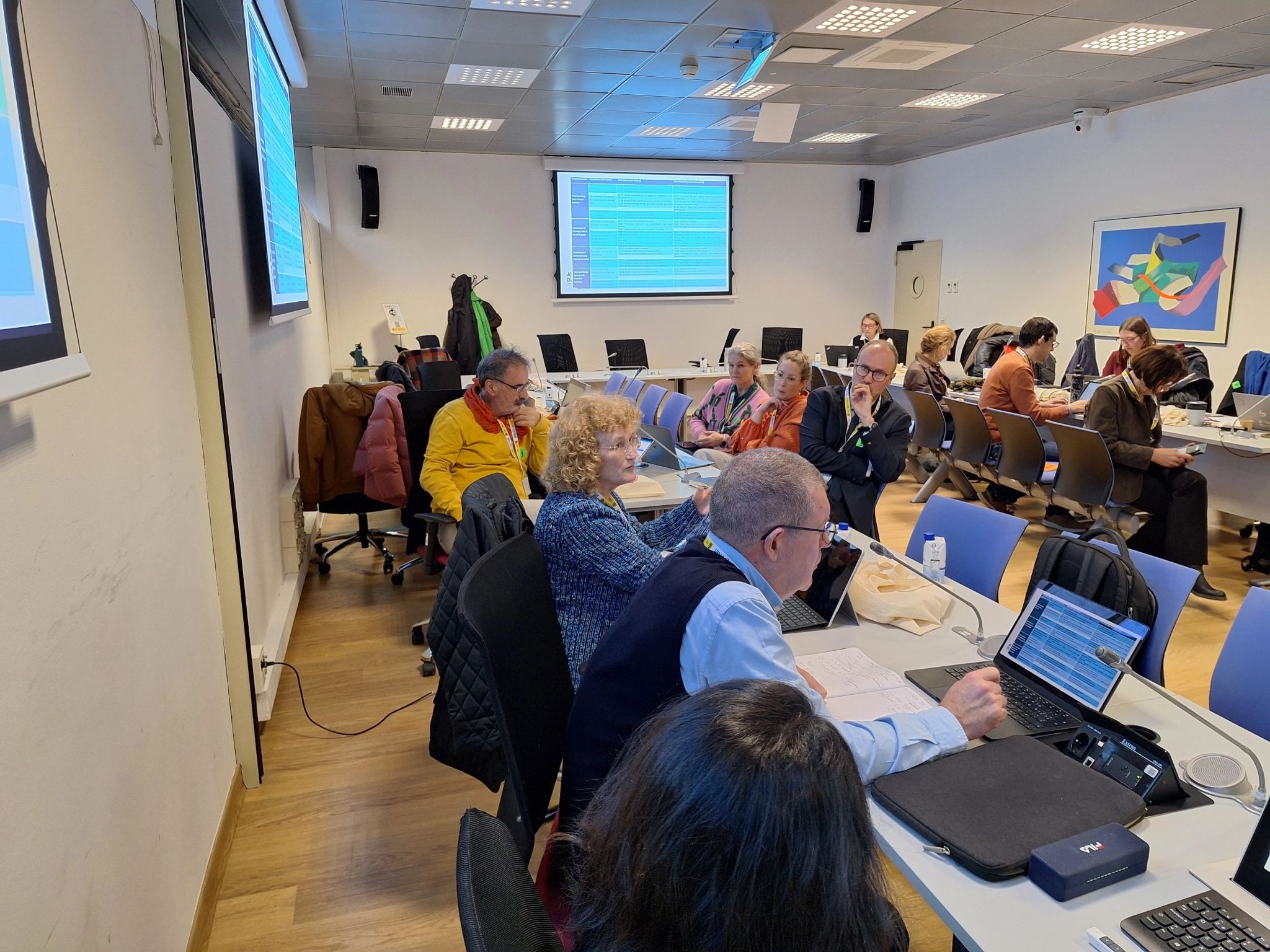
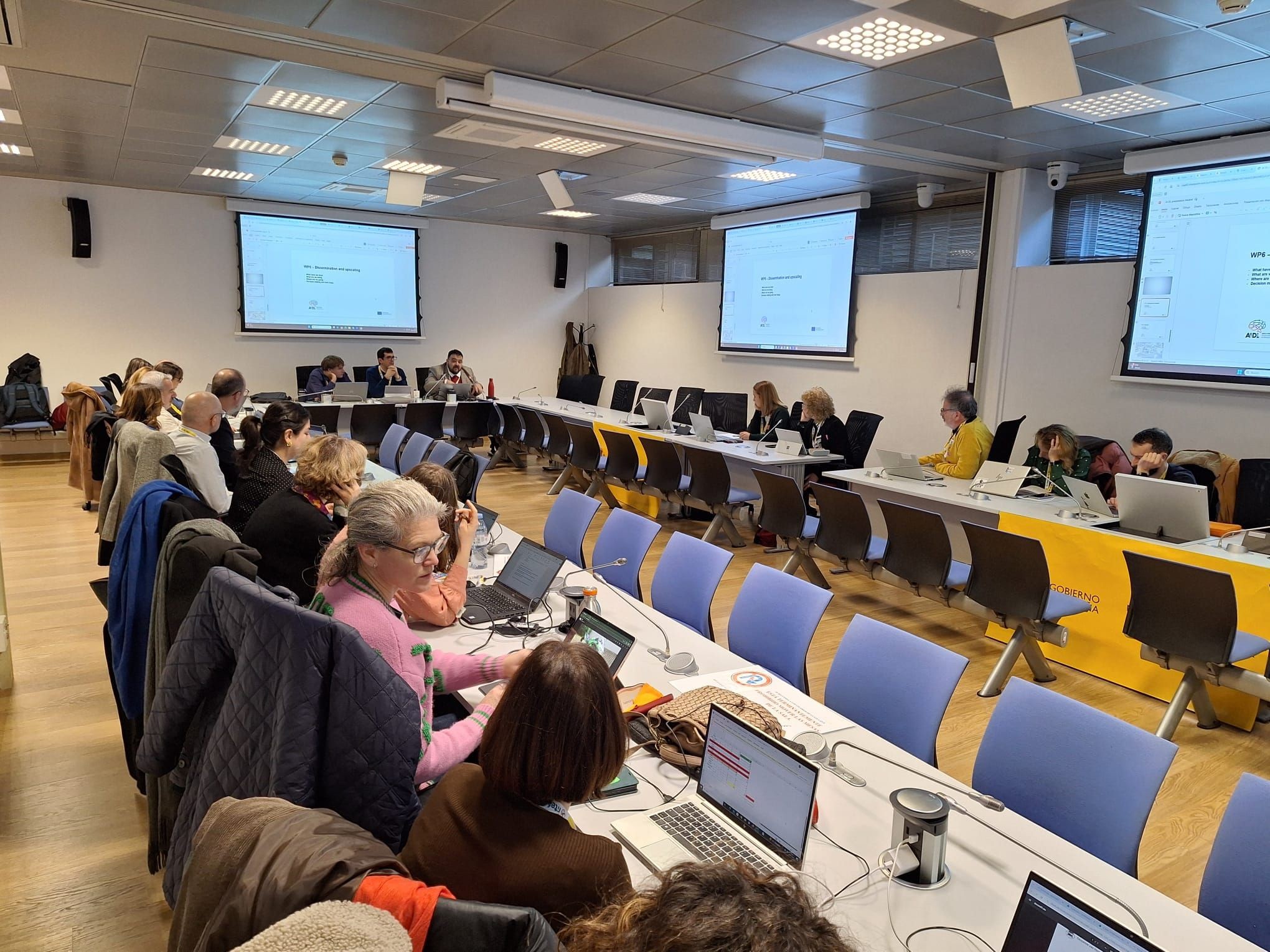
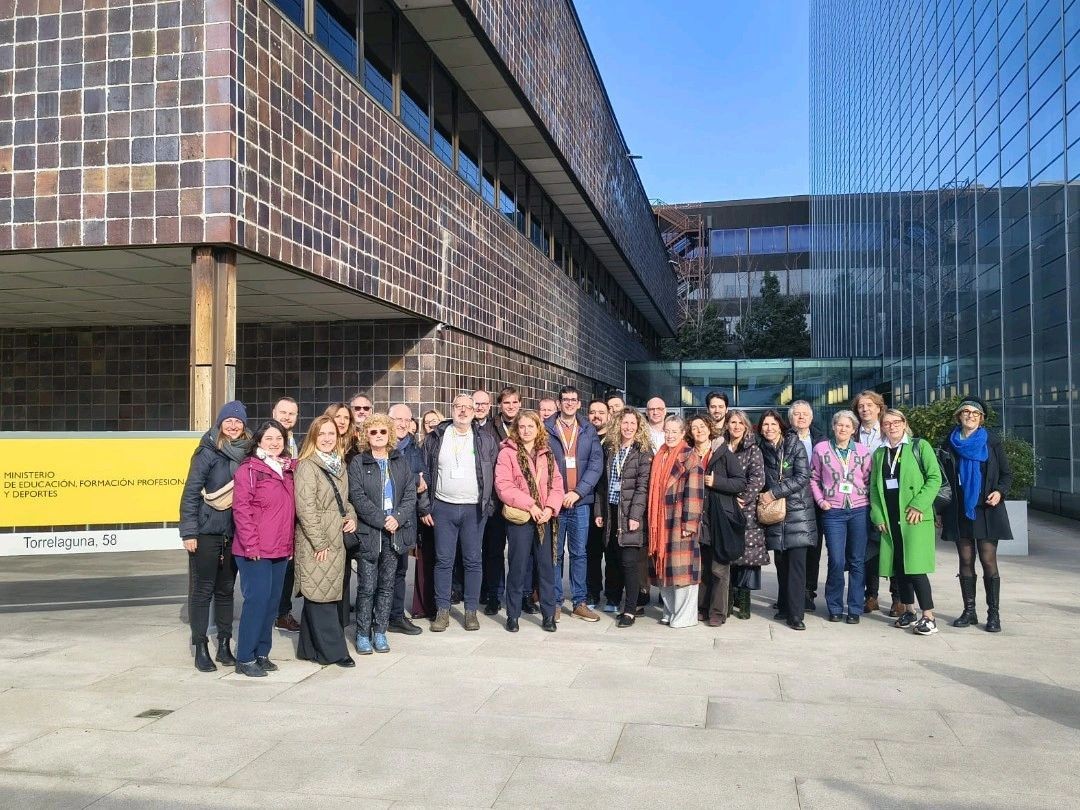
On 26th and 27th November 2025, partners of the AIDLproject gathered in Madrid, Spain, for the second consortium meeting, hosted at the INTEF – Ministry of Education, VET and Sports. First day was more about conversations, while second day moved deeper into designing.
Topics and takeaways of Day 1
1) Defining Data Literacy in the context of AI
While there’s still no widely agreed definition of Data Literacy within an AI framework, this is one challenge we all share. In the AI-DLProject, we’re shaping a working definition where data literacy:
- helps learners understand how data is generated, examined, explored, interpreted, visualised, and used—including how it is utilised by GenAI, and
- strengthens the ability to critically reflect on and evaluate data-driven outputs, so they can be used creatively, effectively, and thoughtfully in educational activities.
We see GenAI not as the “end goal”, but as a powerful trigger to develop meaningful knowledge, skills, and attitudes through real classroom contexts.
2) Evidence is clear: teacher training is needed
Our survey on DataLiteracy and GenAI in secondary schools (579 participants from 7 countries) highlights a strong need for structured teacher professional development.
That’s why we’re preparing a 30-hour training programme: 3 modules designed to support teachers with practical, classroom-ready approaches.
3) Building a framework for Data Literacy in the GenAI era
We’re also developing a data literacy framework tailored to today’s GenAI reality—designed to support both teachers and students in navigating data-informed thinking, decision-making, and responsible use, both in learning and life.
Highlights of Day 2
1) Going further on teacher training (the »what« and the »how«)
We discussed the open questions and ideas of training programme—what teachers truly need, what works in real classrooms, and how to ensure every module stays practical, adaptable, and classroom-ready.
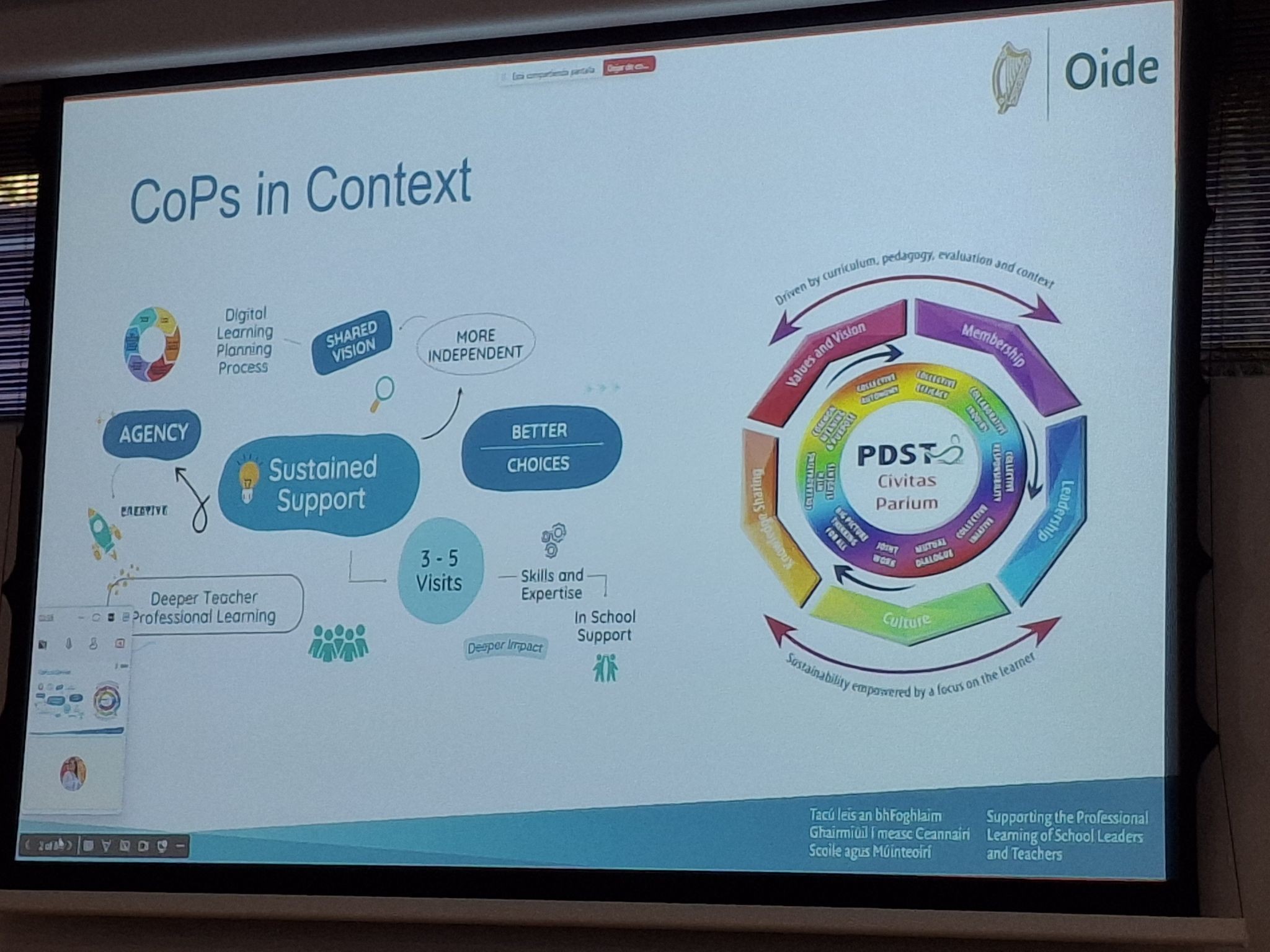
2) Communities of Practice / Professional Learning Communities (PLCs) in action
Partners shared concrete experience from Slovenia and Ireland showing how communities of educators can sustain learning beyond a course. Together, we explored how to design CoPs/PLCs within the project:
- purpose + shared goals
- facilitation + roles
- rhythm (meetups, peer exchange, classroom trials)
- tools and resources that keep participation easy
3) Communication & dissemination: making results usable (and visible)
We further discussed on how to share project resources and findings with the audiences that matter most—teachers, schools, and the wider education community—through coordinated messaging, smart formats, and clear pathways for uptake.
4) Management, quality & evaluation: keeping the project strong
We also aligned on the “behind the scenes” essentials: timelines, responsibilities, quality assurance, and how we’ll evaluate progress and impact—so that what we deliver is not only innovative, but also robust and measurable.
See more on LinkedIn: Day1 and Day2
