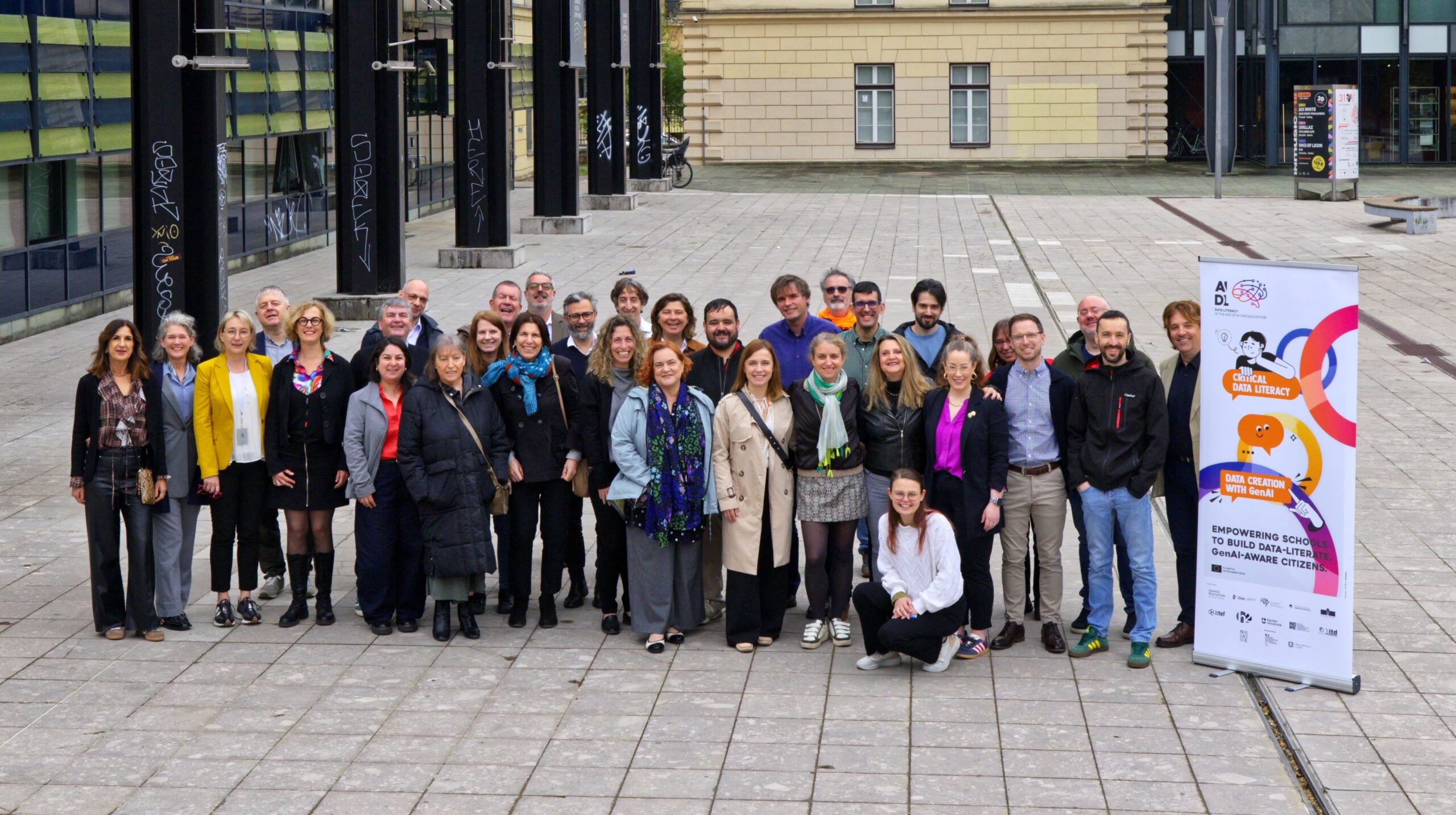
On 13–14 April 2026, partners of the #AIDLproject gathered in Ljubljana, Slovenia, for the third consortium meeting, hosted at the Ministry of Education. Over two intensive and highly productive days, the meeting provided an important opportunity to reflect on progress, exchange perspectives, and shape the next steps of the project together.
The agenda combined strategic discussion with practical exchange. Partners explored an Open Data demo, revisited the development of the AI-DL framework, and worked further on the design of training content to support teachers in becoming more data literate. A key part of the discussion also focused on feedback already being collected from teachers, helping ensure that the project remains closely connected to educational realities and needs.
Another central topic was experimentation in schools, with particular attention to the role of communities of practice (CoPs). Partners reflected on how these communities can be developed across different national contexts, acknowledging that practices, structures, and educational cultures vary from country to country. This exchange underlined one of the project’s strengths: creating shared European goals while staying responsive to local realities.
The meeting also gave space to important cross-cutting areas such as evaluation, dissemination, diagnosis, and upscaling. Throughout these discussions, the consortium kept returning to a common set of questions: What exactly do we want to achieve? How will we know when we have achieved it? And how can we ensure that the project leads not only to visibility, but to meaningful and lasting impact?
More than a coordination meeting, the Ljubljana gathering confirmed the strong collective commitment behind AI-DL. The project continues to bring together research, collaboration, and classroom practice in order to provide meaningful support for schools, teachers, and learners across Europe.
A sincere thank you goes to all partners for their engagement, openness, and momentum. Step by step, AI-DL is helping to build a stronger foundation for data literacy in education in the age of AI.